How to Boost Metabolism Naturally After 40
How do you boost metabolism naturally after 40?
The biggest levers are building muscle with resistance training, eating enough protein, moving throughout the day, sleeping seven to nine hours, and staying hydrated. Caffeine and green tea add a small thermogenic assist. A fat burner like AlkaBurn is a minor supporting tool, not a substitute for those daily habits.
- Muscle is the engine — resistance training and protein defend it as you age.
- Daily movement (NEAT) and sleep quietly shape most of your calorie burn.
- Stimulant ingredients help a little; crash diets hurt by lowering your metabolic rate.
If you are reading this, you have probably noticed that the same breakfast, the same routine and the same weekend indulgence quietly stopped balancing out somewhere in your forties. That is not your imagination, and it is not a moral failing. Learning how to boost metabolism at this stage is less about a single trick and more about reversing a handful of small declines that add up over a decade. The good news is that almost every one of them is a lever you can pull, and most of them are free.
This guide walks through what actually changes as you age, the five habits that move your metabolic rate the most, the myths that waste your time and money, and the honest, limited role a thermogenic supplement can play. We sell an affiliate link to one, so we will be blunt about where it helps and where it does not.
Why metabolism slows after 40 (and what that number really means)
Your total daily energy expenditure — the calories you burn in twenty-four hours — is made of four parts: your resting metabolic rate (the biggest slice, keeping you alive at rest), the thermic effect of food (the cost of digestion), planned exercise, and everything else you do while awake, from fidgeting to walking to the mailbox. That last category has a name, NEAT, and it turns out to be the most variable and the most quietly powerful of all.
The headline reason your resting burn drifts down after 40 is the slow loss of muscle, a process called sarcopenia that begins in your thirties and accelerates later. Muscle is metabolically expensive tissue; it costs calories just to maintain. When you lose it — usually because you stopped challenging it, not because of age itself — your resting rate falls with it. Add in the way most people move less, sleep worse and sit more as careers and families pile up, and the slowdown looks dramatic. Strip those out, and the age-only effect is far smaller than the internet suggests. Large metabolic studies find resting rate stays remarkably stable from your twenties into your sixties once body composition is accounted for. In plain terms: most of what people blame on "a slow metabolism after 40" is really a muscle and movement problem wearing an age costume.
That reframing matters, because it tells you exactly where to aim. You cannot un-turn 45, but you can rebuild muscle, add steps and fix your sleep at any age. Those are the levers below.
How to boost metabolism: the five levers that actually move the needle
Ranked roughly by impact, here is where your effort pays off. None of them is exotic. All of them compound.
1. Build and defend muscle
Resistance training is the single most durable way to raise your resting metabolic rate, because it addresses the root cause of the slowdown. Two to three sessions a week that work the major movement patterns — a squat or leg press, a hip hinge, a push, a pull, and a carry — are enough for most people to start reversing muscle loss. You do not need a barbell or a gym membership; bands, dumbbells and bodyweight progressions all work if you keep adding a little challenge over time. The goal is not to look like a bodybuilder. It is to keep the metabolically active tissue you already have and add a little back. Every pound of muscle you preserve is a pound still burning calories while you sleep.
2. Prioritise protein at every meal
Protein does three useful things at once. It has the highest thermic effect of the three macronutrients, meaning your body spends more energy digesting it. It is the raw material your muscle needs to rebuild after training. And it is the most satiating macronutrient, so it quietly reduces how much you eat later without willpower. A practical target for most adults over 40 is roughly 25 to 40 grams of protein per meal, spread across the day rather than dumped into dinner. Eggs, Greek yoghurt, fish, poultry, tofu, beans and lean cuts all count. If a single change is going to help you fastest, this is usually it.
3. Move more all day — the NEAT lever
NEAT — non-exercise activity thermogenesis — is the calories you burn simply by being an animal that moves. Standing, pacing on calls, taking stairs, carrying groceries, gardening, walking the dog. Between two people of the same size, NEAT can differ by hundreds of calories a day, which dwarfs what a supplement can do. A step target is the easiest way to hold yourself accountable: nudge your daily count up by a couple of thousand and keep it there. This is the lever most people ignore because it is not "a workout," and it is precisely the one that runs quietly in the background every day.
4. Protect your sleep
Short and broken sleep is a metabolic tax. It nudges appetite hormones toward hunger, worsens next-day cravings, reduces the energy you have for movement, and makes it harder to hold onto muscle when you are losing weight. Seven to nine hours is the range that supports the other four levers rather than undermining them. If you take a stimulant fat burner, this is also where timing bites: caffeine late in the day sabotages the very sleep your metabolism depends on, which is one reason we tell readers to keep any caffeinated capsule to the morning.
5. Stay hydrated
Hydration is the smallest of the five levers, but it is close to free. Being even mildly under-hydrated can dull energy and make you mistake thirst for hunger. Water also carries a tiny, temporary thermic cost as your body warms it. Do not expect miracles from a glass of water, but drinking enough to keep pale-yellow urine is a sensible baseline that supports everything else on this list.
Notice the order. Four of the five are lifestyle habits with no price tag, and together they explain the overwhelming majority of the difference between a person whose metabolism feels "fast" and one whose feels "stuck." Anything you buy sits on top of this foundation, not in place of it. If you want the fuller picture on stacking these habits, our guide to how a thermogenic fat burner raises calorie burn explains where the ceiling actually is.

Want a small daily assist on top of the habits?
AlkaBurn is a once-daily capsule built around caffeine and green tea extract — a minor thermogenic lever to pair with muscle, protein and steps. See the full label and today's pricing.
Order NowThe small thermogenic assist: caffeine and green tea
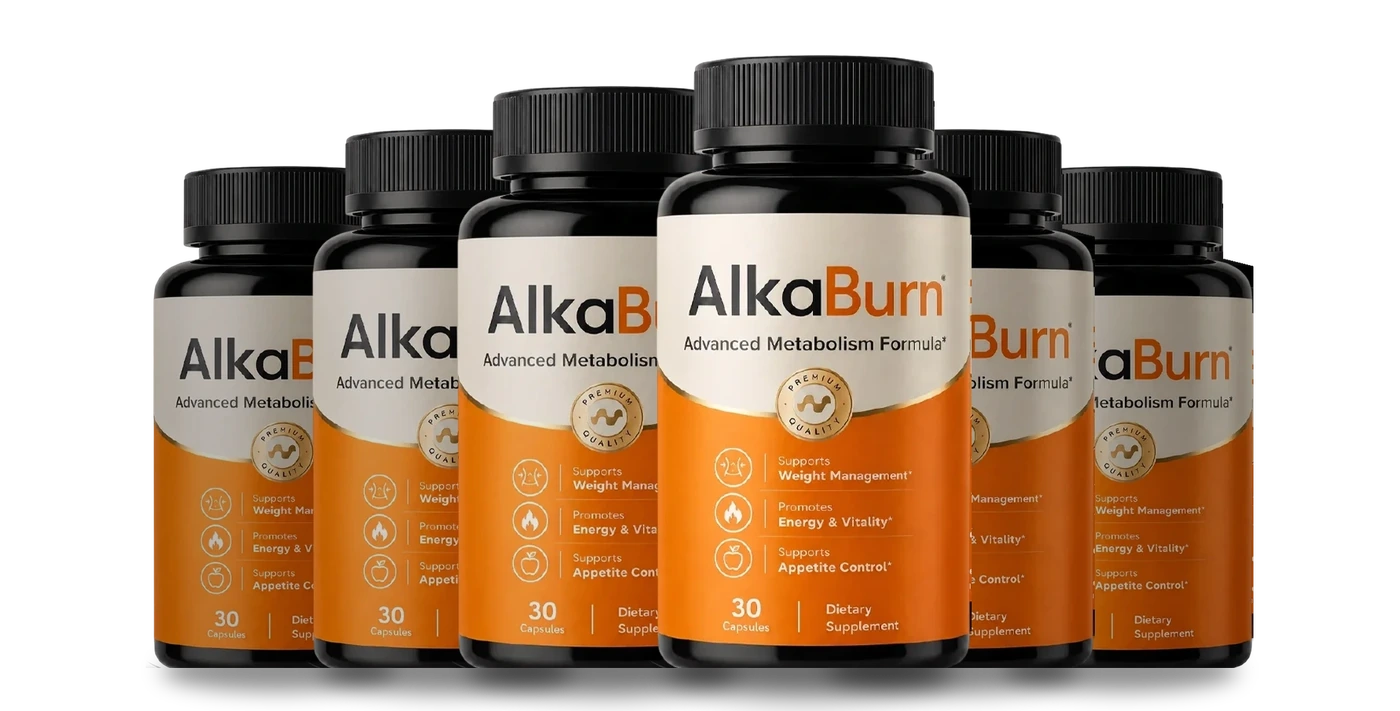
Here is where a supplement enters the picture honestly. Two ingredients have enough evidence to be worth mentioning: caffeine and the catechins in green tea, chiefly EGCG. Both are thermogenic, meaning they produce a small, measurable rise in energy expenditure for a few hours, and caffeine can modestly blunt appetite and improve training performance. This is the mechanism AlkaBurn leans on — a once-daily capsule pairing caffeine anhydrous with a standardised green tea extract.
Keep the scale in view. The thermogenic bump from these ingredients is measured in tens of calories a day for most people, and the body partly adapts to caffeine over weeks. That is a genuine effect, but it is a minor lever next to building muscle or adding two thousand steps. Anyone selling caffeine as a metabolism "cure" is overselling it. Used sensibly — in the morning, counted as part of your total daily caffeine, and paired with the habits above — it is a reasonable little push. Used as a substitute for those habits, it does almost nothing. If you are weighing the stimulant route specifically, our breakdown of using caffeine for weight loss without the crash covers timing and tolerance in detail.
Three myths that quietly waste your effort
Myth one: "metabolism-boosting foods" will do the work. Chilli, ginger, celery, green tea — you have seen the lists. Some of these have a whisker of thermogenic effect, but the numbers are tiny and short-lived. No food overrides the muscle-and-movement equation. Eat them because you enjoy them, not because you expect them to reset your metabolic rate.
Myth two: eating less is always the answer. This is the most damaging one. Severe, prolonged calorie restriction — crash dieting — tells your body to conserve. You lose muscle along with fat, your resting rate drops, NEAT falls because you have less energy to move, and the weight returns faster than it left. Moderate deficits paired with high protein and resistance training protect muscle and keep your metabolism from digging its heels in. If your instinct after 40 is to slash food, that instinct is working against you.
Myth three: a pill can replace the plan. This is the objection we hear most from readers considering a fat burner, and it is a fair one. No capsule — AlkaBurn included — outperforms the five levers. Supplements occupy the last few percent of the effort, not the first. Anyone promising otherwise is selling a story. The right question is not "will this pill boost my metabolism," but "will this small assist help me stick to the habits that actually do." For some people, a morning routine and a little extra energy help; for others it is noise. That is an honest place to land.
A simple four-week plan to put the levers to work
Knowing the levers is easy; sequencing them is what makes them stick. Rather than overhauling everything on Monday and quitting by Friday, layer one change per week so each becomes automatic before the next arrives. This is how habits survive past the initial burst of motivation, and it is the difference between a metabolism reset that lasts and one that lasts a fortnight.
Week one — protein first. Add a palm-sized protein source to breakfast and lunch, the two meals most people under-eat it at. Nothing else changes yet. This single move improves satiety almost immediately and quietly reduces the snacking that undoes an afternoon, while laying down the raw material for the muscle you are about to start building.
Week two — start resistance training. Two short full-body sessions, twenty to thirty minutes each, covering a squat, a hinge, a push and a pull. Begin lighter than you think you should. The goal is to build the habit and groove the movement patterns, not to be so sore for three days that you talk yourself out of the next session. Consistency beats intensity every time at this stage.
Week three — raise your steps. Check your current daily average, then add roughly two thousand steps and hold it there. Park further away, take walking phone calls, add a short after-dinner loop. This is the NEAT lever, and it compounds every single day whether or not you feel it working — which is precisely why it is so easy to neglect and so powerful once installed.
Week four — fix the edges. Set a consistent sleep and wake time to protect the seven-to-nine-hour window, and keep a water bottle in sight so hydration takes care of itself. Only now, with the foundation actually running, is it worth deciding whether a thermogenic capsule adds anything for you — because now you have a system for it to support rather than a gap for it to paper over.
Four weeks in, none of these are heroic efforts. They are small, repeatable defaults that fit around a job and a family. That is the entire point. A metabolism that "slowed after 40" rarely needs a dramatic intervention; it needs a handful of ordinary daily habits reinstated and held long enough to compound.
Where a supplement like AlkaBurn actually fits
Picture the levers as a stack. The base is muscle, protein and daily movement — that is most of your metabolic rate. Sleep and hydration sit on top, protecting the base. A thermogenic supplement is the thin cap at the very top: real, but small, and only worth adding once the layers beneath it are in place. If you have not started resistance training or fixed your protein, spend your money on good food and your time in the gym first. A capsule bolted onto an empty foundation is just expensive caffeine.
If the base is already there and you want a modest daily nudge — a bit of morning energy, a small thermogenic push, one appetite lever — then a once-daily capsule like AlkaBurn is a defensible add-on, provided caffeine agrees with you and you keep it early. Before you decide, it is worth reading how to choose diet supplements for weight loss so you can judge any formula on its printed dose rather than its marketing. Judge it the way you would judge any tool: by what it adds on top of a working system, not by what it promises to replace.
This article is about lifestyle and general nutrition. It is not medical advice, and the statements on this product's label have not been evaluated by the Food and Drug Administration. This product is not intended to diagnose, treat, cure or prevent any disease. Speak to a qualified healthcare professional before starting any supplement, especially if you take medication or manage a health condition.
Put the small lever in place
Build the habits, then add a once-daily thermogenic capsule if it helps you stay consistent. See the full AlkaBurn panel and current pricing.
Order NowFrequently asked questions
How can I boost my metabolism naturally?
Build and keep muscle with two or three resistance sessions a week, eat enough protein, walk more across the whole day, sleep seven to nine hours, and stay well hydrated. These habits raise the calories you burn at rest and during activity. Caffeine and green tea can add a small extra push on top.
Why does metabolism slow after 40?
The main reason is the gradual loss of muscle that begins in your thirties and speeds up later, because muscle is more metabolically active than fat. Lower activity levels, poorer sleep and shifting hormones add to it. Most of the slowdown is habit-driven, which is why it responds to training, protein and movement.
Do supplements really speed up metabolism?
Stimulant ingredients such as caffeine and green tea catechins produce a small, measurable rise in energy expenditure for a few hours, and can modestly curb appetite. That effect is real but minor next to muscle, protein and daily movement. Treat a fat burner as a supporting tool, not the main driver of your metabolic rate.
What is the fastest way to increase metabolism?
There is no overnight switch. The quickest sustainable change is to add protein to every meal and take more steps each day, because both act immediately and compound over weeks. Building muscle is slower but raises your resting burn the most. Avoid crash diets — they lower metabolism rather than raise it.